
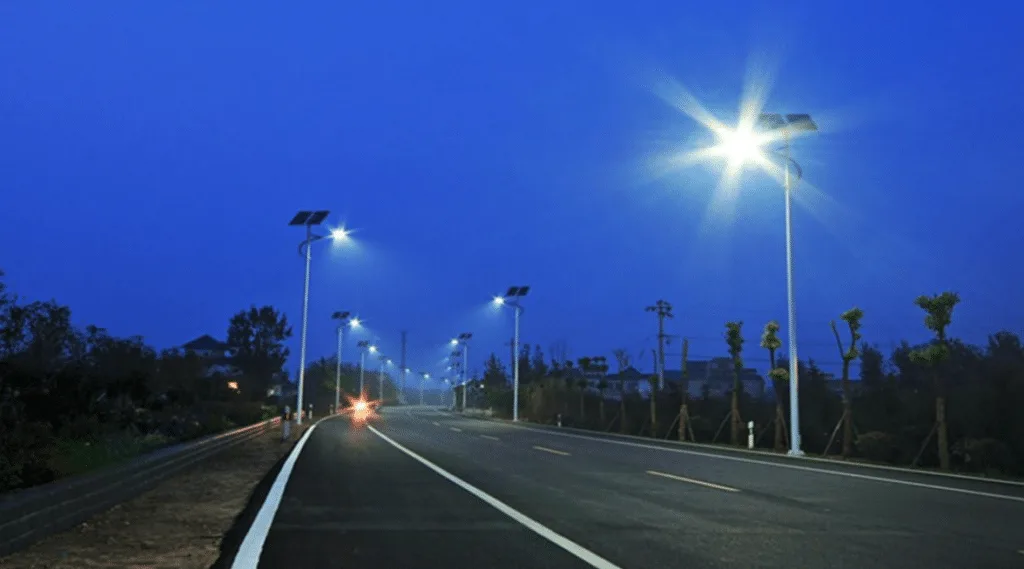
It’s understandable why you would feel uncertain when buying a solar street light. I mean, you could be buying another cheap replica that, like the last one, won’t last more than a few months, It’s happened to me, too. Eight years ago, I put in a set of “bargain” lights” to illuminate a long driveway, and after a single week of heavy rain, the lights turned into expensive lawn ornaments. Ever since, I decided I would only use and review the more expensive and effective lighting that would actually keep a long driveway safe, and light up the entire length of the driveway all winter long.
2026 has finally brought us the technology we’ve all been waiting for when it comes to solar street lights. No more do we have to settle for what consumers and pioneers of the industry once dubbed “glowing markers”. We now have the first completely autonomous lights that will be able to replace street lights that are currently wired to the grid. These solar street lights are the most effective lights when it comes to securing a dark corner of the property, illuminating a private access road, or even lighting up the driveway when you take the trash out after dark.
The most advanced solar technology on the market is fully self sufficient. There is no need to trench, no need for electricians, and no need for another monthly utility bill. In my 10 years in the industry, I have seen great changes in the technology that powers these lights. The shift to high-capacity lithium batteries from lead-acid and advancements in LED technology have created lights that are immensely more reliable.
The Three Greatest Advantages to Switching to Solar Street Lights:
- No Expenses Paid: The sun covers operational costs.
- Quick Set Up: I can install a pole-mounted unit in 30 minutes.
- Environmentally Friendly: You are reducing your carbon footprint and securing your property by getting a brighter property.
How do self sufficient solar street lights work? Solar street lights are essentially autonomous power plants. They are quite complex, but when designed to good engineering, their power is huge. The 4 most important parts are:
- The solar panel, the collector.
- The battery, the storage.
- The LED, the emitter.
- And the controller, the brains.
Solar panels capture sunlight and convert it into DC electricity. The controller manages this energy and makes sure the battery charges safely without overcharging. Once the sunlight is gone, a light-sensitive sensor (usually built into the panel) instructs the controller to flip the switch. This is when the battery starts powering the LEDs.
In my opinion, the “brain” or MPPT controller really makes a pro solar street light stand out. Advanced controllers can extract energy from the panel even on overcast days. The reason some lights dim at midnight and others are bright until 5:00 am is most likely to do with the efficiency of the controller.
Biggest Benefits of Installing a Solar Street Light at Your Home
People often underestimate the ability to cut the wires that come with installing a solar panel. The energy savings is also a great benefit. Here are some more reasons why I highly recommend these systems:
• Total Independence from the Grid: Your solar street light will stay on even when the power is out in your entire neighborhood during a storm. This is a great security feature.
- No Trenching or Wiring: Traditional outdoor lighting requires cumbersome, expensive electrical conduit trenching, which can cost thousands and destroy your landscape. With solar, Simply mount the lights on a sturdy pole or flat wall.
- Extremely Low Maintenance: Modern LEDs will last 50,000+ hours, and other than the handful of times you might need to wipe off the solar panel, they are basically a ‘set and forget’ type of fixture.
- Self-Intelligent: Most of the units we recommend at ralighting have built in motion sensors. They can run in a 30% ‘dim’ mode to save battery and jump to 100% brightness the instant someone comes into the detection zone.
2026 Most Important Features To Look For
When looking for a solar street light, ignore the hype surrounding fancy products. With over a decade in the industry, this is what your focus should be:
Lumens vs Watts
Watts used to be the industry standard. Nowadays, we focus on lumens (actual light produced). For an average driveway, you’ll need at least 2,000-5,000 lumens. For large parking lots or high-security areas, 10,000 lumens or above is mandatory.
Battery Type (LiFePO4 is King)
In 2026, I would recommend only Lithium Iron Phosphate (LiFePO4) batteries. These batteries can be charged thousands of times, can handle heat better, and usually last 5–7 years before needing to be replaced.
IP Rating (Weatherproofing)
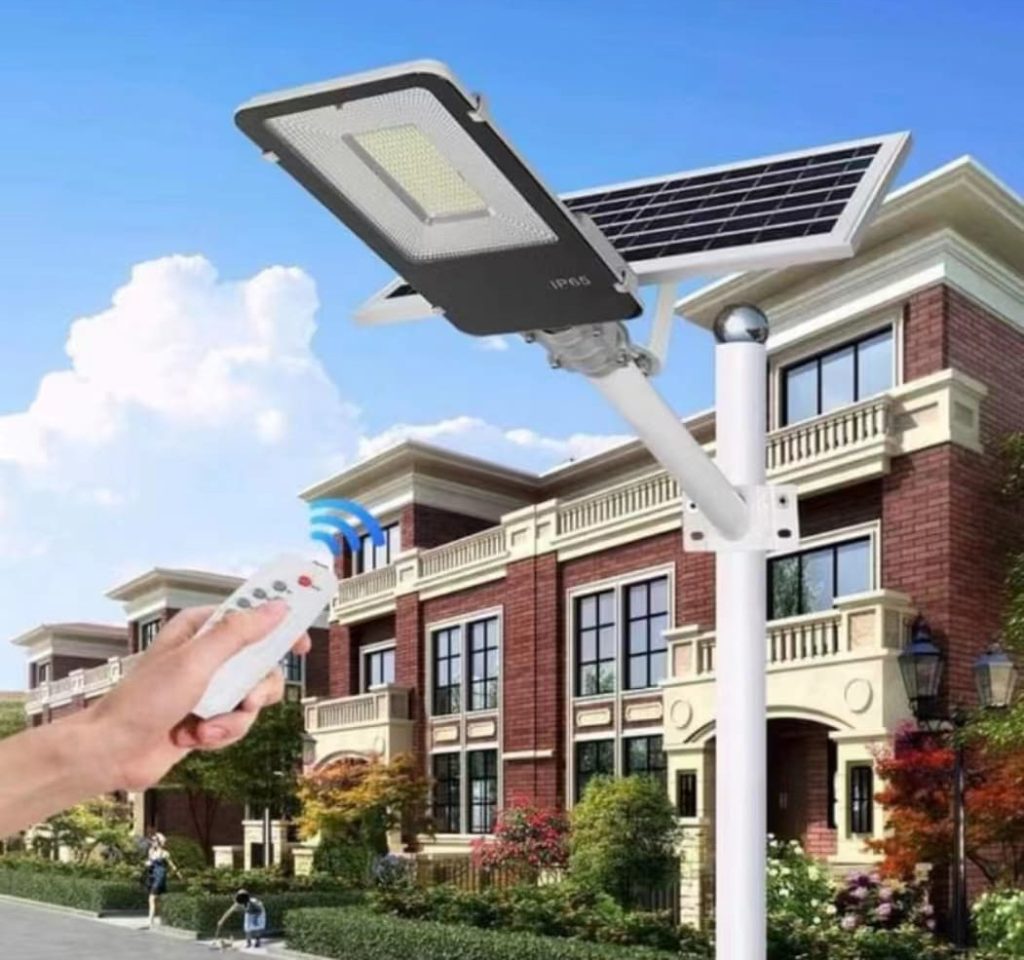
Try to get at least an IP65 rating. Higher IP ratings (65 and 67) mean they can handle heavy rain, snow, and dust. I saw a light that was labeled water resistant fail after an overly humid summer because condensation developed inside the light. To avoid this, try to get at least an IP65 rating.
Smart Modes and Sensors
The best lights have PIR (Passive Infrared) motion sensing and “dusk to dawn” timing. If the light is mounted at least 15 feet in the air, a remote control for the PIR and light changes, height adjustments, and timing defaults is a huge plus.
Different Styles of Solar Street Lights and Which to Choose
Not every solar street light looks like a giant cobra-head lamp. Depending on your aesthetic, you have options:
| Style | Best For | Pro / Con |
| All-in-One (Integrated) | Driveways & Yards | Easiest to install; panel angle is fixed. |
| Split-Type | Shady areas | Panel can be moved to the sun; more wiring. |
| Decorative Post | Front walkways | Looks like classic street lamps; usually lower lumens. |
| Solar Flood/Security | Backyard/Side doors | Extremely bright; less “street” aesthetics. |
For the average homeowner, the All-in-One Solar Street Light is the ideal option. It is a self-contained unit that slides onto a pole, making installation a 10-minute process. Our store has a wide selection of high-quality all-in-one flashlights. I recommend taking a look at this model.
Our Top Solar Street Light Picks from ralighting.net
We’ve evaluated dozens of products to create this list. These are the workhorses I would be comfortable placing in my mother’s driveway.
- The Titan 15k Pro (/product/titan-15k-pro-solar-street-light)
- Most Suitable For: Large-scale residential and commercial security.
- Details: 15,000 Lumens, LiFePO4 battery with 3-day backup,
- Expert Opinion: This is the largest unit we stock. It is unnecessary for a small patio, but for a 100-foot driveway, this is the best option.
- The Slimline 4000 (/product/slimline-4000-solar-light)
- Most Suitable For: Residential yards and pathways.
- Details: 4,000 Lumens, a slim aluminum case, and a motion sensor,
- Expert Opinion: I darling this unit for the aesthetics. It’s slim and modern, and doesn’t appear to be industrial equipment.
- The Remote Guardian 8000 (/product/remote-guardian-8k)
- Most Suitable For: Zones with adjustable lighting.
- Details: 8,000 Lumens, a remote control is included (various timer settings).
- Expert Tip: Keep the remote on
100%the first 4 hours of the night, then change it to motion-only.
- Eco-Step Solar Street Light (/product/eco-step-model)
- Best For: People on a tight budget who still want a good product.
- Specs: 2,500 Lumens, polycarbonate shell.
Step-by-Step Installation Guide + Mistakes to Avoid
There are a few tips that will save you a lot of hassle later, even though installing a solar street light is significantly easier than installing a wired one.
Steps to success
- Wire Test Before Mount: Before you climb the ladder, light the light and cover the solar panel with a piece of cardboard to imitate a night setting. Make sure it fires up!
- True South: In the Northern Hemisphere, your panel must face South. Even a 20-degree angle will increase sun exposure in the winter.
- Pole Secure: If you are using a grounded pole, it should be buried at least 2 feet deep with concrete. These lights have a “sail” effect in high wind so the light will be pulled down by the pole.
- Height matters. For 5,000 lumen lights, 10–12 foot mounting heights are ideal. Higher than this and the light will “wash out”. Lower, and light levels could be too blinding to the eye.
Common Mistakes I’ve Seen
- Shadow snagging. Light installed under a tree canopy. Even “dappled” light can reduce charging to a range of 50% or more.
- Competing light sources. Do not put your solar street light right next to a bright porch light or a neighbor’s floodlight. The sensor may think it’s still daytime, and will never get to turn on.
Tips to keep your solar street light 7–10+ years
It kills me to see good technology end up in a landfill because of the lack of maintenance, and you can avoid this in the case of solar street lights. They are self-maintaining.
- 6 month wipe down. Dust, pollen, and bird droppings are a “dimmer switch” for your solar panel. Every six months, take a damp cloth to wipe the panel.
- Winter Strategy. For those living in snow, you need to make sure the panel is angled steeply enough, about a 45-degree angle, so snow will, gravity will determine, slide naturally off.
Light Maintenance
Here are a few light maintenance tips you can perform to extend the longevity of the solar light.
- Unlike most lights, ralighting lights have a replaceable battery. If the light is only lasting 3 to 4 hours, it is likely time to replace the internal battery.
- Be aware of tree branches that may block sunlight during the day. They may have been unobtrusive last year, but that may have changed.
Real Cost Breakdown & Payback Time
Traditionally, people have been more reluctant to spend money on good quality solar lights. However, a good quality solar light is a wise investment, with the maths likely favouring solar within the first 18 months.
Standard Wired Light
- Unit Cost: $150
- Trenching/Wiring (50 feet): $800 – $1,200
- Electrician Labor: $300
- One time Electricity Bill: $5 (Total over 5 years = $300)
- Total Cost over 5 years = $1,600+
Titan 15k Solar Light
- Unit Cost: $450
- Installation Cost: $0 (You need to do it yourself)
- Electricity Bill = $0
- Total Cost over 5 years = $450
With good quality solar lights, you are avoiding a lot of the ‘hidden costs’ of copper wire and labor, which is more than $1,000 of savings. You are also saving around $40-$80 each year, depending on your solar light, on your utility bill.
Solar Street Light vs. Traditional Wired Lights: Quick Comparison
| Feature | Solar Street Light | Traditional Wired |
| Initial Cost | Moderate to High | Low (for unit) / High (for install) |
| Energy Bill | $0 | $5 – $15 per month |
| Power Outage | Works perfectly | Goes dark |
| Maintenance | Cleaning panel | Replacing bulbs/checking wiring |
| Installation | 30 Minutes (DIY) | 1-2 Days (Professional) |
| Environment | 100% Renewable | Grid-dependent |
Why Are Solar Street Lights Your Best Option In 2026
2026 can be the year that you don’t have to use extension leads to have outdoor lights. With a solar street light you can have peace of mind. I know that a light can turn a dark, ‘creepy’ backyard space, into a usable, safe space and I have seen the difference first hand.
Unlike other companies, we don’t create ‘throwaway’ products. We create lights that survive the rain, heat and the test of time. Choosing a High Lumen, LiFePO4 powered system is investing in your home’s security and your wallet.
Are you interested in viewing our extensive inventory for solar street lights as well? We have options that will suit your needs. Whether it be one unit for your gates, or a dozen for a private street, we have equipment that will last.
FAQs
Q: Do solar street lights function when it is snowing or cloudy? A: Yes, with a small exception. Modern solar street lights use solar panels that can charge even when it’s cloudy. It just will charge at a slower rate. Our professional grade models have the ability to dim lights when they are in low charge situations.
Q: What is the actual lifespan of your LED lights? A: The solar street lights LED chips are designed to last 50,000 hours, so if the lights are used for only 12 hours of the night, that is over 11 years of use!
Q: Can I place these on a wooden fence post? A: Yes. Your unit will be able to be set thanks to the mounting system that is designed for it. Just make sure that the fence is strong enough to hold the weight of the battery.
Q: How many lumens do I need for a standard driveway? A: For a 2-car driveway, I suggest at least 3,000 to 5,000 lumens. This will allow enough “throw” to see the edges of the pavement, without it looking and feeling like a sports stadium.
Q: Is the battery replaceable? A: For our high-end models at ralighting.net, yes! We prioritize sustainability, so instead of replacing the entire fixture, you can replace the lithium cells after 5-7 years.
Q: What if it hails? A: The tempered glass on today’s solar panels are extremely durable. Most are made to handle 1-inch hail at terminal velocity. I’ve lived through countless storms where the solar lights were the only things that survived!